

Is The Rolex Wall Clock Genuinely Silent Or Does It Produce Ticking, Humming, Or Grinding Noises?

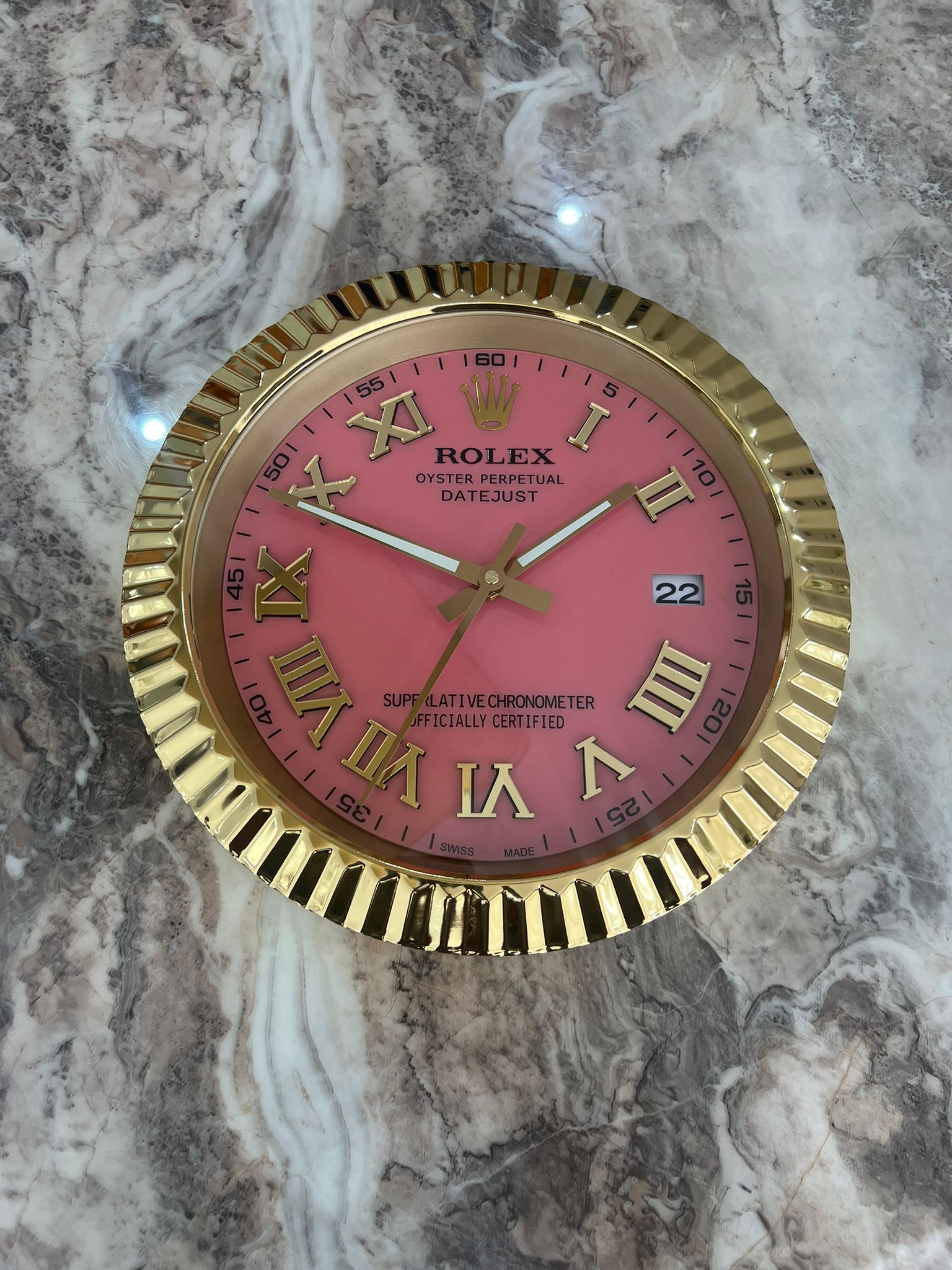
A fashion wall clock can look completely silent while still producing a faint tick every second. The same applies to a Rolex-style wall clock. Its appearance, size, or luxury-inspired design does not automatically tell you how quietly it operates. The real answer depends on the movement fitted inside the clock, how the hands are driven, and whether the mechanism is designed as a silent-sweep or conventional quartz movement.
This is worth understanding before choosing a decorative clock for a bedroom, study, lounge, or any room where background noise becomes noticeable. A clock that seems quiet in a busy showroom may sound surprisingly obvious at night when everything else is still.
What Actually Makes A Wall Clock Silent?
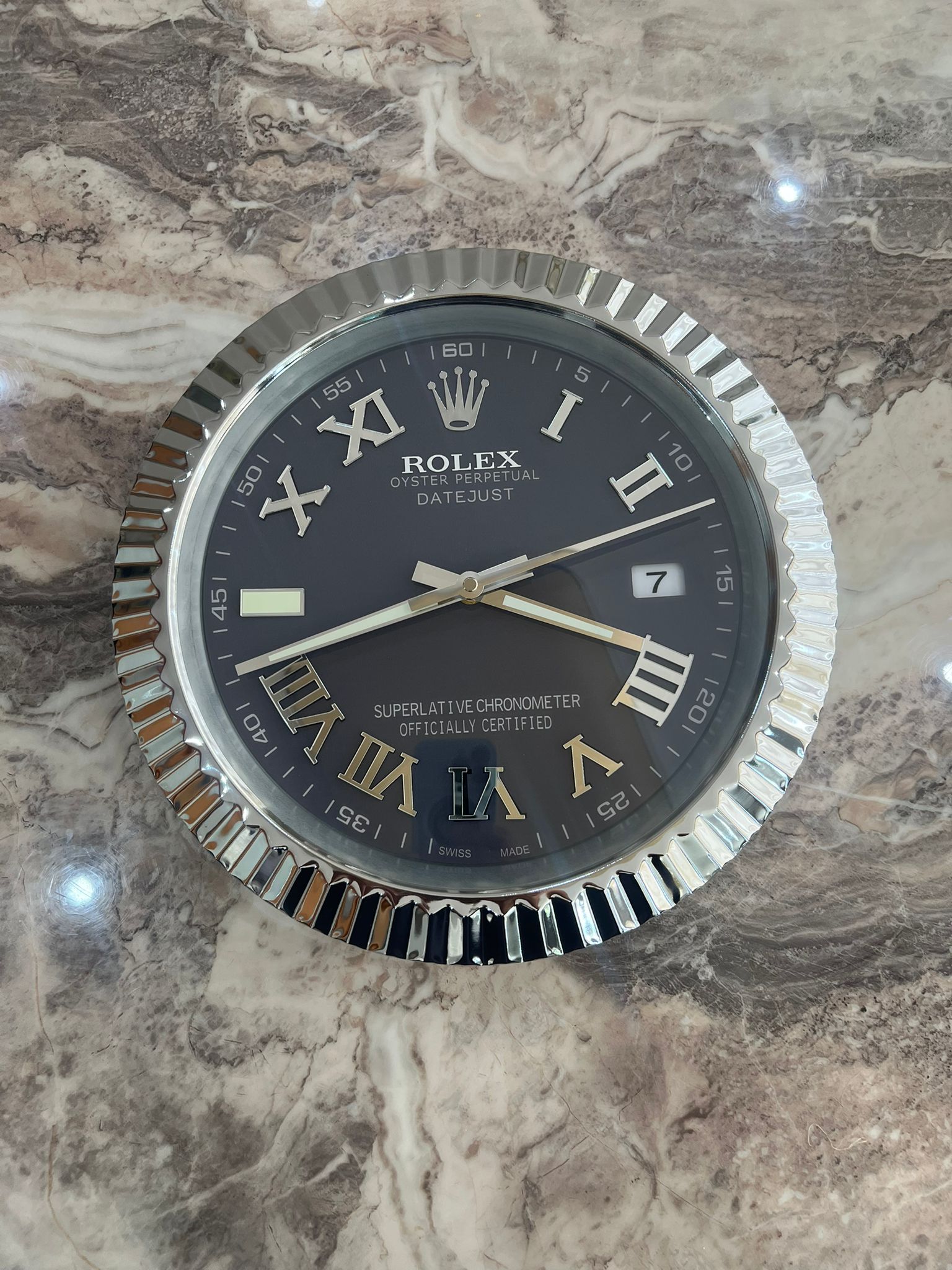
Rolex Datejust in Platinum Silver Bezel
The most important component is the clock movement. This is the mechanism responsible for moving the hands and keeping time.
Traditional quartz wall clocks commonly move the second hand in individual one-second steps. That movement can create the familiar “tick-tick-tick” sound. It may be very quiet, but in a silent room, the repeated sound can become noticeable.
A silent or sweep movement works differently. Instead of making a distinct movement once every second, the second hand moves continuously or in very small intervals. The result is substantially less audible ticking.
This distinction matters more than whether the clock is described as a luxury wall clock, designer wall clock, or modern wall clock. Two clocks can look almost identical but have completely different acoustic characteristics because they use different movements.
For a useful explanation of how silent clock movements work, this guide to silent clock movements explains why some clocks tick while others do not.
Is A Rolex Wall Clock Completely Silent?
The first point to establish is that the term “Rolex wall clock” can describe different products in the marketplace. It does not necessarily mean that the clock was manufactured by Rolex itself.
Rolex’s current official accessories collection does include Rolex desk clocks, including a Submariner-inspired model using an exclusive quartz movement. Its official product information identifies these as desk clocks rather than a general range of Rolex-branded wall clocks.
That distinction is important when shopping online. A Rolex-style wall clock may borrow visual elements associated with Rolex watches while using a third-party quartz movement. Therefore, you should not assume that the sound characteristics of the movement are connected to Rolex watchmaking itself.
There are also Rolex community discussions about wall clocks where enthusiasts question the origin and authenticity of various Rolex-branded clocks. These discussions are useful as a reminder to check the actual product description rather than relying on the name alone.
Will It Make A Ticking Sound?
It can.
If the clock uses a conventional step quartz movement, you may hear a small tick each time the second hand advances. The volume varies between mechanisms, so “quartz” by itself does not guarantee that a clock will be noisy.
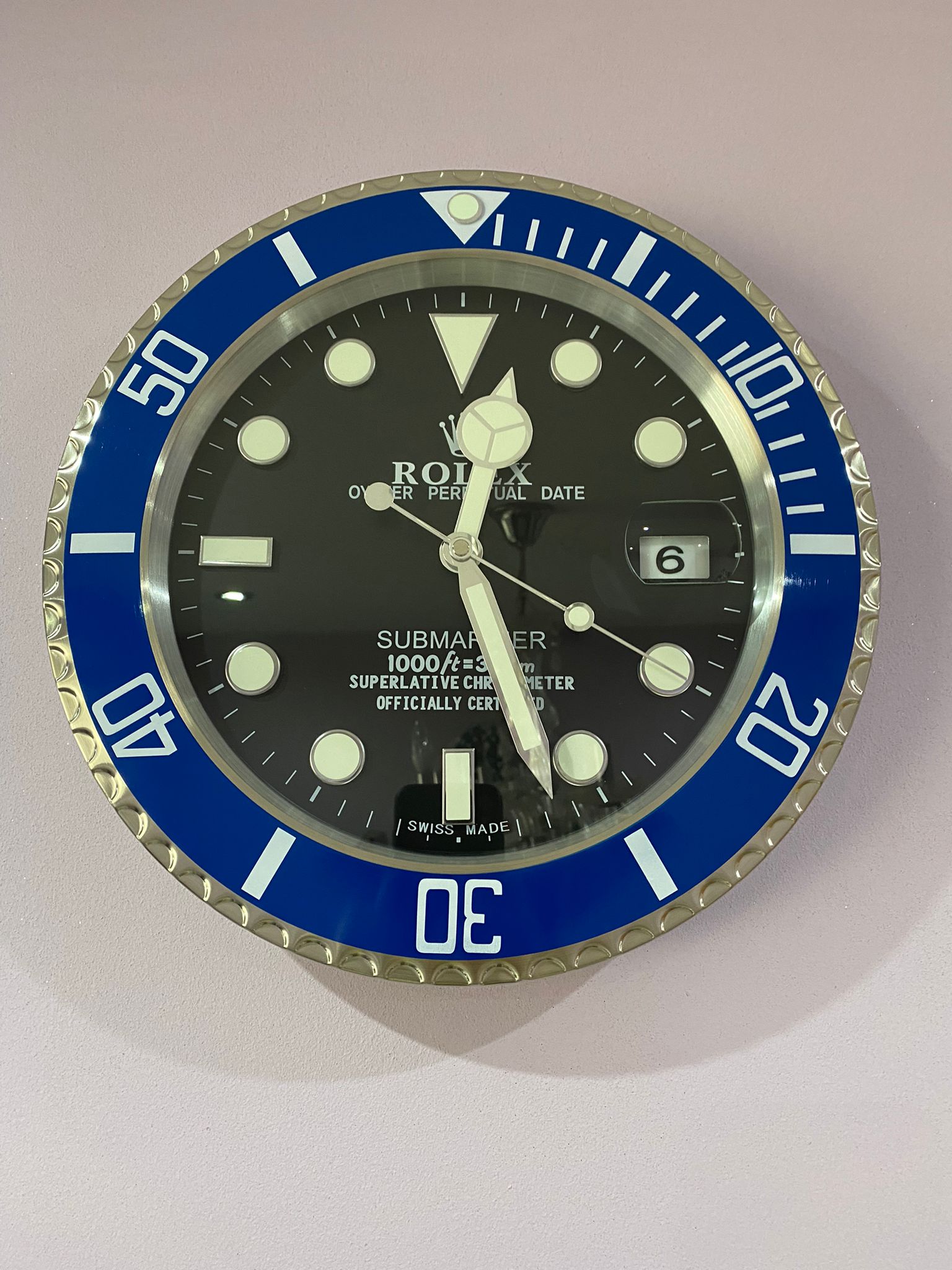
luxury wall clock Rolex Submariner blue bezel with black
For a bedroom or home office, the difference can be more noticeable because there is less competing sound. During the day, the ticking may disappear into normal household noise. At night, the same clock can suddenly seem much louder.
This is why someone searching for a best fashion wall clock should consider the movement alongside appearance. A beautiful clock is not necessarily the right clock if its operating noise bothers you.
What About Humming?
Humming is different from normal ticking.
A faint electrical or mechanical hum can sometimes come from the motor or from vibration being transferred through the clock case. In many ordinary quartz clocks, however, a noticeable continuous hum would not normally be the feature you are looking for.
The way a clock is mounted can also change what you hear. A slightly loose mechanism, uneven wall contact, or lightweight case can allow small vibrations to become more noticeable.
If you are buying a large fashion wall clock, this becomes worth considering because a larger case can sometimes act as a sound-reflecting surface. The movement itself remains the key factor, but the construction can influence how easily small sounds are perceived.
What Does Grinding Or Clicking Usually Mean?
A regular, gentle tick can be normal for a step quartz movement. Grinding, scraping, irregular clicking, or a sudden increase in noise is different.
Such sounds can indicate that something is interfering with the hands or movement. For example, the hands may be touching each other, rubbing against the dial or glass, or the movement may not be sitting correctly.
A useful troubleshooting principle is simple: normal operating sound is usually consistent; mechanical problems tend to sound irregular.
Guides such as this explanation of common clock noises and their causes can help distinguish ordinary movement sounds from noises that deserve attention.
How Can You Check A Clock Before Buying?
The safest approach is to look beyond photographs.
First, check whether the product description specifically says silent movement, non-ticking movement, or continuous sweep movement. If it only says “quartz movement”, ask the seller whether the second hand moves once per second or continuously.
Second, consider where the clock will be installed. A clock for a busy living room does not necessarily need the same acoustic performance as one positioned beside a bed.
Third, listen to the actual mechanism if possible. A short demonstration video can sometimes reveal more than a long product description. For example, this clock movement demonstration can help you understand what movement behaviour looks and sounds like in practice.
Is A Silent Movement Better For A Fashion Wall Clock?
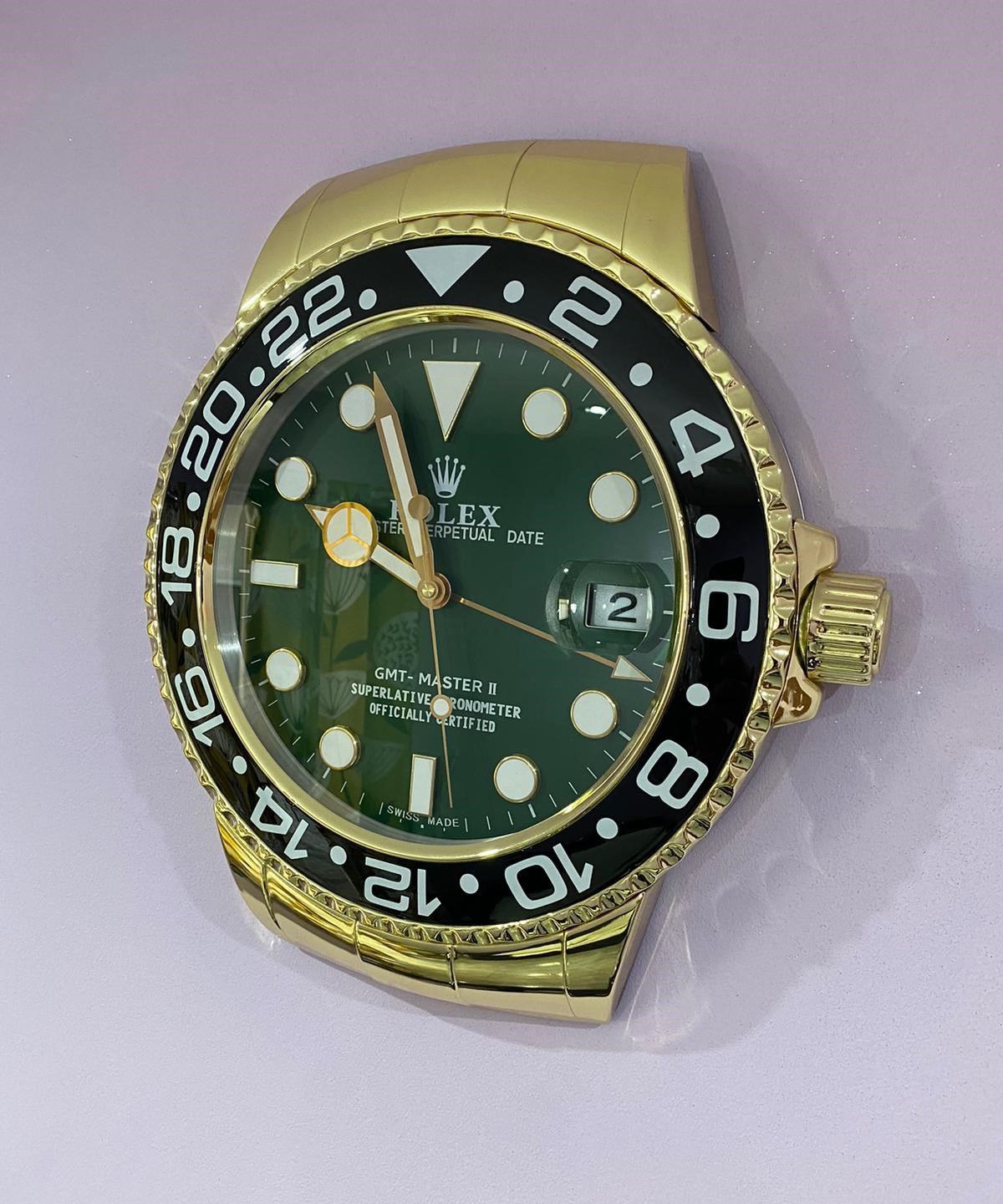
Rolex Limited Edition GM Master Series Black & Gold Wall Clock
Not automatically. It is better when quiet operation is important to you.
For a living room, hallway, restaurant, office, or larger social space, a conventional quartz movement may be perfectly adequate. The surrounding environment already contains enough sound that a faint tick may never become relevant.
For a bedroom, nursery, reading room, or study, silent operation has a more practical advantage. You are more likely to notice repetitive sounds when the room is quiet.
The same principle applies to a vintage fashion wall clock, an antique-inspired design, or a contemporary clock. The visual style tells you how the clock looks; the movement tells you how it behaves.
What Should You Look For In A Quiet Luxury Clock?
If silence is important, focus on the movement specification first and the styling second.
A good decision process is to ask:
- Does the clock use a silent or sweep movement?
- Does the second hand move continuously rather than stepping once per second?
- Does the seller clearly state the expected operating sound?
- Is there any mention of unusual humming, clicking, or mechanical noise?
- Is the clock intended for bedrooms or quiet spaces?
- Can the movement be replaced if it eventually becomes noisy?
This approach is more useful than simply searching for a stylish wall clock, unique wall clocks for living room, or a designer-looking model and assuming that an expensive appearance means silent operation.
Choosing Between Style And Sound
The best clock is ultimately the one that fits the environment in which it will live.
Someone furnishing a dramatic living room might prefer a large statement piece, while another person may care more about a barely noticeable mechanism. Someone looking for fashion wall clocks for decorative purposes may prioritise the dial, case and overall proportions, while someone placing a clock beside a bed may consider silence the primary requirement.
If you want to explore different luxury-inspired styles, you can compare options such as our Luxury Wall Clock collection before deciding which design suits the room.
It is also useful to remember that a silent movement is not necessarily a mark of superior craftsmanship. It is simply a different mechanical choice designed around a different user preference.
The Practical Answer
So, is a Rolex-style wall clock genuinely silent?
Not necessarily. If it uses a conventional step quartz movement, a faint ticking sound is possible. If it uses a properly designed silent-sweep movement, ticking should be greatly reduced and may be effectively inaudible from normal listening distance.
Humming or grinding is a separate matter. A persistent or irregular noise should not simply be accepted as part of the design. It may indicate vibration, hand interference, movement positioning, or another mechanical issue.
For anyone comparing a fashion wall clock, the sensible approach is therefore to treat silence as a specification rather than an assumption. Look at the movement, ask how the second hand operates, and consider the room where the clock will be used.
A beautiful clock should tell the time without demanding attention from the room around it. In the end, the quietest choice is not always the most expensive one; it is usually the one whose movement is properly matched to the environment.
FAQs
Are Rolex Wall Clocks Completely Silent?
Not every Rolex-style wall clock is silent. Noise depends on the movement fitted inside. A conventional quartz movement can tick, while a silent-sweep movement is designed to minimise audible ticking.
Why Does My Wall Clock Tick At Night?
A clock can seem louder at night because background noise is much lower. If the movement advances the second hand once every second, its repeated ticking can become particularly noticeable in an otherwise quiet bedroom.
Is A Silent Sweep Movement Better?
A silent-sweep movement is usually preferable when a clock will be installed in a bedroom, study, nursery, or other quiet space. It reduces the repetitive ticking associated with conventional step quartz movements.
Can A Quartz Wall Clock Be Silent?
Yes. Quartz describes the timekeeping technology, not necessarily the noise level. Some quartz movements use a sweeping second hand and are designed specifically for quieter operation in residential environments.
What Causes Grinding Sounds In A Wall Clock?
Grinding can result from mechanical interference, incorrectly positioned hands, contact between components, vibration, or a problem with the movement. Unlike ordinary ticking, irregular grinding deserves further inspection.
Are Luxury Wall Clocks Always Quiet?
No. A luxury appearance does not determine how quietly a clock operates. The movement, hand design, case construction, mounting and overall mechanism are more relevant when evaluating acoustic performance.
Our Approach To Choosing A Luxury Wall Clock
At Luxury Wall Clock, we believe choosing a clock should begin with how you intend to experience it, not simply how it looks in a photograph.
We focus on the balance between design, usability and the environment where a clock will be placed. Whether you prefer a statement piece, a contemporary design, or a Rolex-inspired aesthetic, we encourage you to consider the movement and practical details alongside the appearance.
Because ultimately, the right wall clock should become part of the room naturally. It should keep time, complement the space, and ideally remain quiet enough that you notice the design rather than the mechanism.