

How Accurate Is The Rolex Wall Clock, And How Often Does It Need A Battery Replacement?

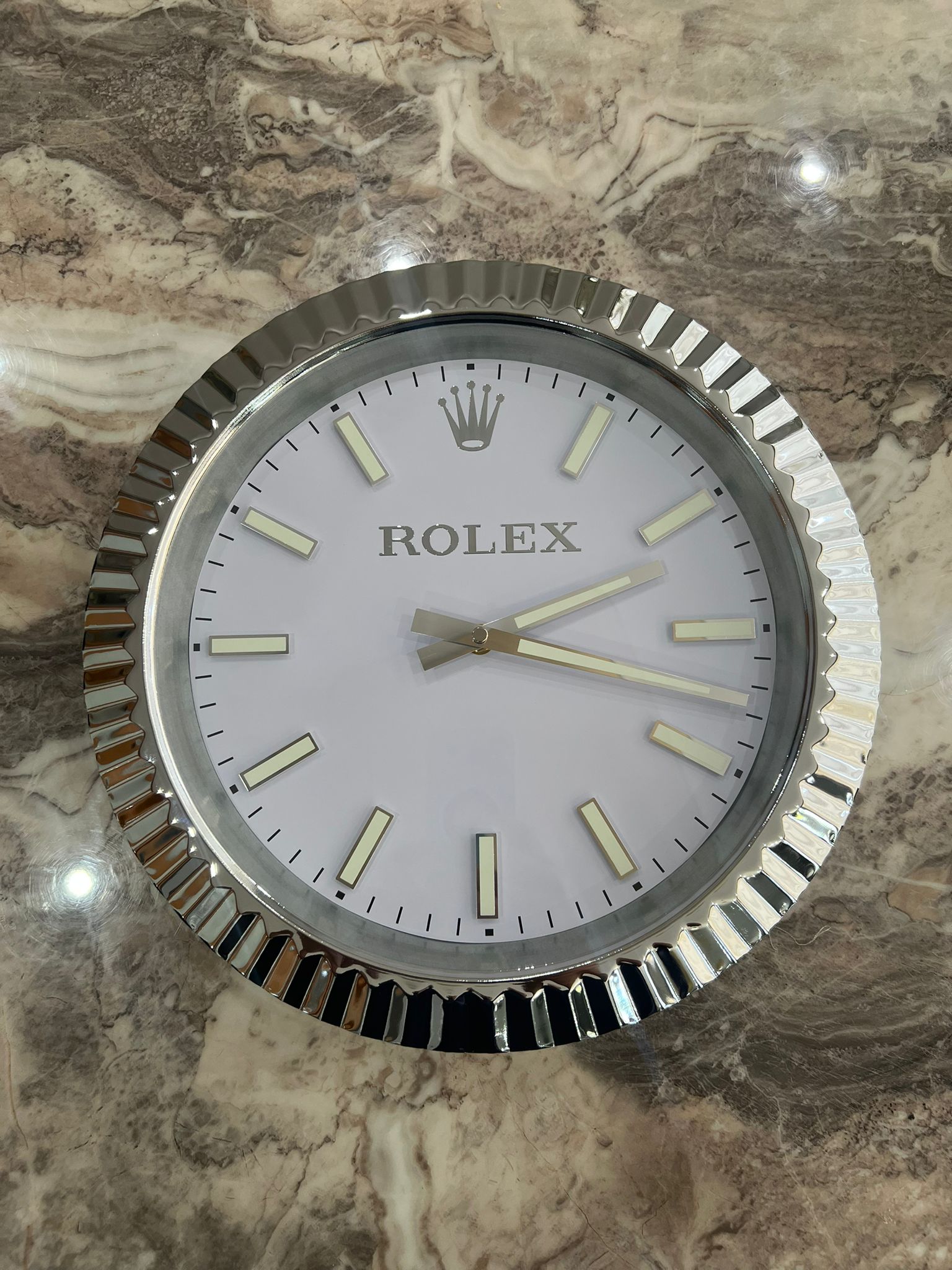
A Rolex clock wall display is generally accurate enough for everyday use when it uses a good-quality quartz movement, but its precision depends more on the movement than the Rolex-inspired design. Most battery-powered quartz wall clocks can remain within roughly 10–20 seconds per month under normal conditions, while a good AA battery commonly lasts around 12–18 months. However, genuine Rolex dealer-display clocks and aftermarket Rolex-style wall clocks are not necessarily built with the same mechanism, so accuracy and battery life can vary considerably.
Key Takeaways
- A quartz Rolex wall clock is normally accurate enough for everyday timekeeping.
- Accuracy depends primarily on the quartz movement, not the appearance or branding of the dial.
- A quality AA alkaline battery will commonly last around 12–18 months in a standard quartz movement.
- Silent-sweep and high-torque movements can consume more power than conventional ticking movements.
- A weakening battery can cause a clock to lose time before it stops completely.
- Genuine Rolex dealer-display clocks should not automatically be assumed to use the same movement as modern aftermarket clocks.
- Replacing the battery annually is a simple way to reduce unexpected stopping and inaccurate timekeeping.
How Accurate Is A Rolex Clock Wall Display?
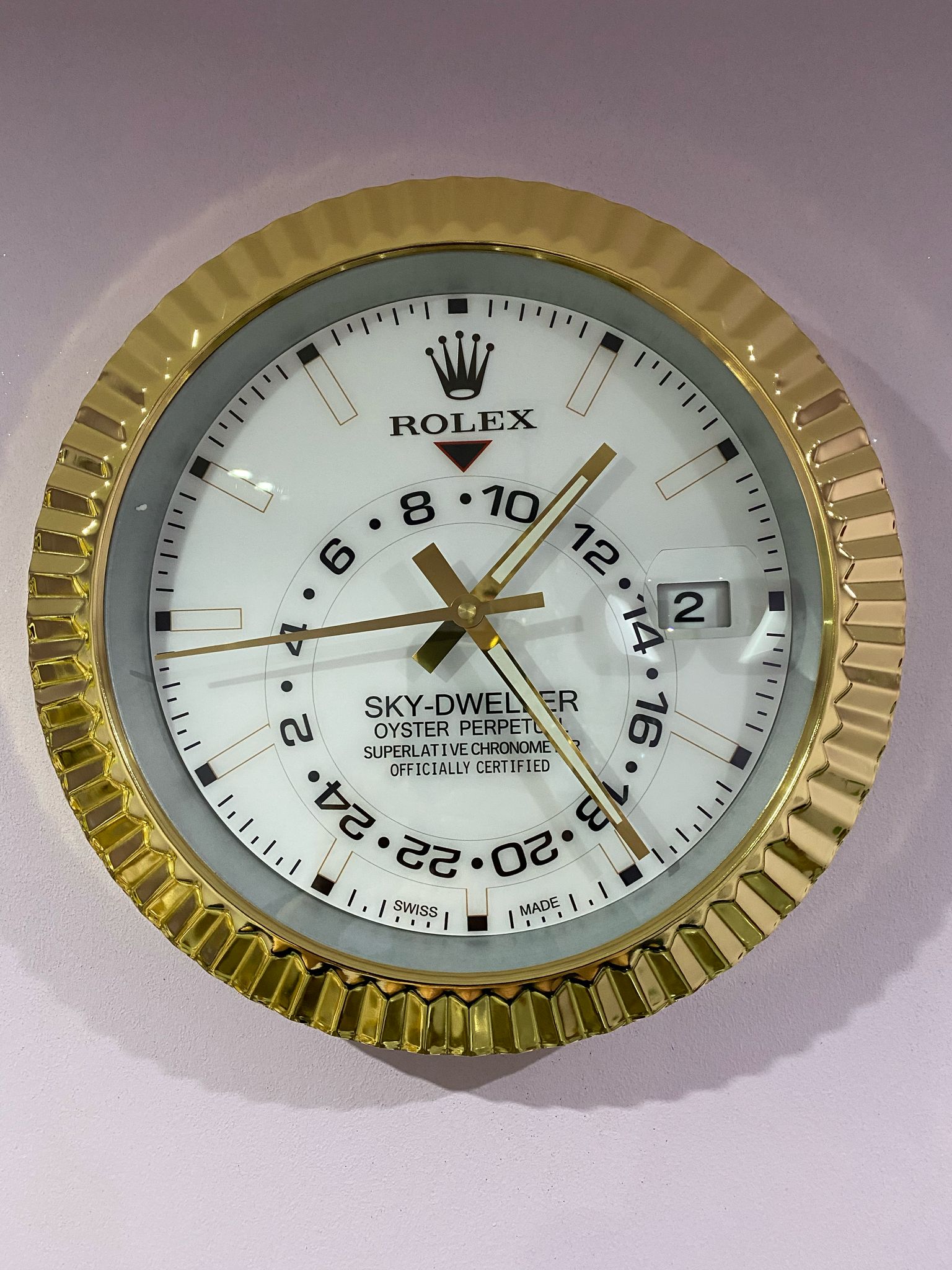
Rolex Rolex wall clock Sky-Dweller Style – Yellow Gold Bezel with White Face
When someone asks how accurate a Rolex clock wall display is, the first question should actually be: What movement is inside it?
The Rolex-style appearance tells you very little about timekeeping performance. The hands, dial, bezel and oversized watch design may imitate a luxury watch, but the actual accuracy comes from the clock movement hidden behind the dial.
For a conventional quartz wall clock, the quartz oscillator provides a stable reference for the electronics controlling the hands. In practical terms, that means a properly functioning quartz movement should be accurate enough for normal household, office or retail use. Some standard quartz wall clocks are specified around ±15–20 seconds per month, although the exact tolerance depends on the movement.
This is also why it is useful to separate the idea of a luxury clock from the idea of a precision instrument. A luxury wall clock may be beautifully finished and visually convincing without having a chronometer-grade movement. Conversely, an inexpensive quartz clock can keep remarkably consistent time despite having a very simple mechanism.
For a broader discussion of Rolex watch accuracy, the Rolex accuracy discussion on Reddit is useful because it shows why watch accuracy and wall-clock accuracy should not automatically be treated as the same thing.
The Movement Matters More Than The Rolex Design
The most important distinction when buying Rolex wall clocks is between the design and the mechanism.
Many clocks sold today that resemble Rolex dealer displays use battery-powered quartz movements. Some use traditional step movements, where the second hand advances once per second. Others use silent-sweep movements that move the second hand continuously or in smaller increments.
That difference affects both the experience and battery consumption.
A standard quartz movement is usually the practical choice when accurate everyday timekeeping is the priority. A silent movement can be preferable in bedrooms, offices and other quiet spaces because it reduces the familiar ticking sound.
The movement also needs to be appropriately matched to the clock hands. Large decorative hands can place more load on the motor. If a movement is not powerful enough for the hands, the clock may start losing time, stop intermittently or consume batteries faster.
This is particularly relevant when comparing different luxury clocks that look almost identical from the front.
How Often Does A Rolex Wall Clock Need A Battery?
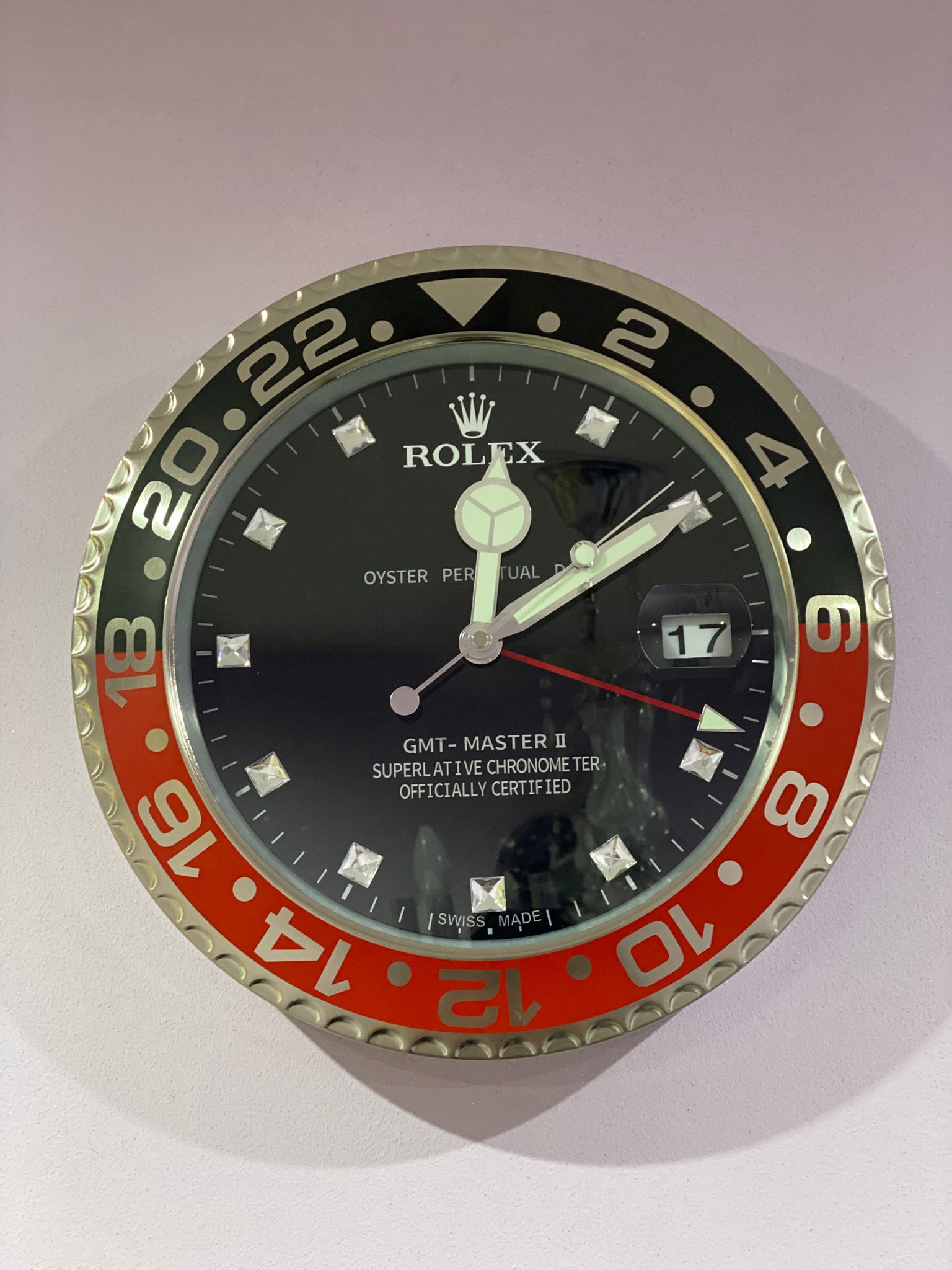
Rolex GMT Master II Wall Clock Black & Red Diamond Dial
For a typical battery-powered quartz Rolex clock, replacing the battery approximately once a year is a sensible maintenance routine.
A quality alkaline AA battery commonly provides around 12–18 months of operation in a standard quartz wall clock, although some movements can run longer. Manufacturer specifications for comparable quartz wall clocks also commonly state that a good AA alkaline battery should last more than 12 months.
Silent-sweep movements can consume slightly more power because the motor operates differently from a conventional step movement. Large clocks using high-torque movements can also require more frequent battery replacement because the motor has to move heavier hands.
So there is no universal answer such as “every two years” for every Rolex watch clock. The movement, hand weight, battery quality and surrounding temperature all matter.
| Clock Setup | Practical Battery Expectation | Main Consideration |
| Standard quartz | Around 12–18 months | Efficient everyday option |
| Silent-sweep quartz | Around 10–14 months | Smoother movement can use more power |
| High-torque movement | Around 6–12 months | Designed for heavier hands |
| Cold or demanding environment | Potentially shorter | Battery performance can fall |
These are practical ranges rather than guarantees. A specific clock’s manual or movement specification should always take priority.
Does A Weak Battery Affect Accuracy?
Yes, and this is one of the easiest problems to overlook.
People often assume that a clock is accurate until the moment it stops. In reality, a weakening battery can cause problems before complete failure. The movement may no longer receive enough power to move the hands consistently, causing the clock to lose time.
If your Rolex clock for wall suddenly begins running several minutes behind, changing the battery should be one of the first troubleshooting steps.
This is particularly important with a decorative clock positioned high on a wall. You may not notice that it has gradually lost time until the difference becomes obvious.
A useful habit is to write the battery replacement month on a small note inside the battery compartment. That turns battery replacement from guesswork into simple maintenance.
What Battery Should You Use?
For most standard indoor quartz Rolex wall clocks, a good-quality alkaline battery is the sensible starting point.
The exact battery should always match the specification printed on the movement or supplied by the manufacturer. Many conventional wall clocks use one AA battery, while other movements can use different sizes or configurations.
Avoid mixing old and new batteries, and do not assume that a more expensive battery automatically makes a clock more accurate. Battery quality mainly affects how reliably the movement receives power over time.
If the clock is difficult to access because it is mounted high on a wall, a longer-lasting battery can be worth considering, provided it is compatible with the movement.
What About Genuine Rolex Dealer Display Clocks?
Rolex Sky-Dweller Wall Clock
This is where the subject becomes more complicated.
The phrase “Rolex wall clock” can refer to very different products. Some clocks are Rolex-inspired aftermarket pieces, while others are claimed to be genuine dealer-display items.
Collectors have discussed the distinction for years. On Rolex Forums, for example, discussions about dealer clocks include claims that authentic dealer displays were not ordinary retail products and that many examples sold online are reproductions or aftermarket pieces.
That matters because you cannot reliably use the performance of one Rolex-style clock to predict the performance of another.
A genuine historical dealer display may have a different construction, movement or servicing history from a modern quartz Rolex wall clock UK buyer might purchase online.
Therefore, if accuracy and battery life matter, it is better to inspect the actual movement and battery specification rather than relying on the Rolex name or the visual design.
How To Tell If Your Rolex Clock Needs Attention
There are a few simple signs that deserve attention:
- The clock consistently loses time over several days.
- The second hand starts behaving irregularly.
- The clock stops even after a recent battery replacement.
- The hands hesitate or fail to move properly.
- A fresh battery lasts dramatically less time than expected.
If a fresh, compatible battery does not solve the problem, the movement itself may need adjustment or replacement.
This is usually more practical than attempting to repair individual gears inside an inexpensive quartz module. The movement is often designed as a replaceable unit.
How Does It Compare With Other Luxury Wall Clocks?
The same principle applies across most wall clock brands.
A Breitling-style, Omega-style, Cartier-style or Rolex-style clock may have a completely different appearance while using a similar quartz mechanism behind the dial. The visual identity creates the design experience; the movement determines the timekeeping.
That is why shoppers comparing the best wall clocks should look beyond the dial. Check the movement type, battery requirement, hand weight, sweep or ticking action and replacement availability.
If you are comparing different styles, you can also browse our luxury wall clock collection to compare the broader design range rather than judging a clock only by its brand-inspired appearance.
For readers specifically interested in Rolex-inspired designs, our Rolex wall clock collection provides a more focused place to compare available options.
What Is The Best Maintenance Routine?
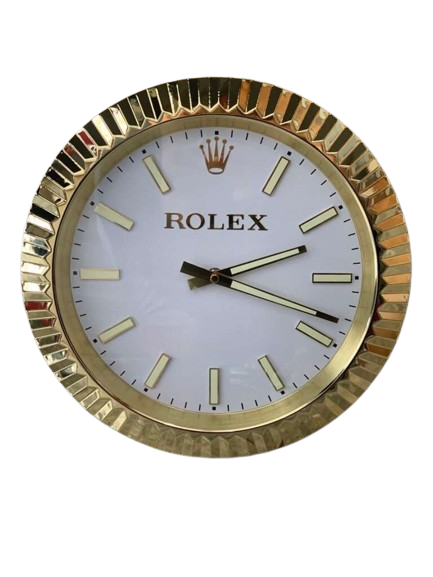
For most owners, maintenance does not need to be complicated.
Set the clock against a reliable time source when you install a new battery. Check it again after a few weeks. If it remains consistent, there is usually no reason to interfere with the movement.
Then replace the battery roughly once a year unless the particular movement specifies a different interval.
Keeping the clock away from extreme temperatures and replacing an aging battery before it completely fails can also reduce unnecessary problems. Comparable quartz wall-clock guidance recommends replacing batteries when the clock begins losing time or stops operating correctly.
The important principle is simple: do not confuse decorative luxury with mechanical precision. A beautiful Rolex clock wall display can be an excellent piece of interior design, but its practical accuracy comes from the humble mechanism working behind the dial.
Final Verdict
A well-made quartz Rolex wall clock should be accurate enough for everyday timekeeping, with an expected drift measured in seconds rather than minutes under normal conditions. A quality AA battery will commonly last around 12–18 months, although silent-sweep, high-torque and other specialised movements can change that range.
The sensible approach is therefore to judge the clock on its movement, not simply its appearance. If the clock starts losing noticeable time, replace the battery first. If the problem continues with a fresh battery, investigate the movement.
For buyers, that small distinction makes choosing a luxury clock wall display much easier: the design determines how the clock looks in your room, while the movement determines how well it performs.
Frequently Asked Questions
How Accurate Is A Rolex Wall Clock?
A Rolex-style quartz wall clock is generally accurate enough for everyday use, although exact performance depends on its movement. A typical quartz mechanism may drift only several seconds per month under normal conditions.
How Long Does A Rolex Wall Clock Battery Last?
Most standard quartz wall clocks using a quality AA alkaline battery can operate for roughly 12–18 months. Silent-sweep and high-torque movements may require replacement sooner because they can consume more power.
Why Is My Rolex Clock Losing Time?
A weakening battery is the first thing to check when a quartz clock starts losing time. If replacing it does not help, the movement, hand alignment or mechanical load may need inspection.
Does A Rolex Wall Clock Use The Same Movement As A Rolex Watch?
Not necessarily. Most Rolex-style wall clocks use conventional quartz wall-clock movements, while Rolex wristwatches use specialised watch movements. Their similar appearance does not mean their internal mechanisms are related.
Should I Replace The Battery Every Year?
Replacing the battery annually is a practical maintenance habit, especially if you cannot easily access the clock. However, the correct interval depends on the movement, battery type and actual running performance.
Are Genuine Rolex Dealer Wall Clocks Battery Powered?
There is no single answer for every historical dealer display. Genuine dealer clocks and aftermarket Rolex-style clocks can differ considerably, so buyers should verify the specific clock’s movement and provenance rather than assuming all use the same mechanism.
Why We Take A Practical Approach
We look at luxury wall clocks from the perspective of how they actually work in a home or business environment. Appearance matters, but so do movement quality, maintenance, readability and everyday reliability.
We also believe buyers should know the difference between a genuine historical dealer display and a Rolex-inspired decorative clock before making a decision. That distinction makes it easier to understand what you are paying for and what performance you should realistically expect.
If you are comparing styles, movements and finishes, we invite you to explore our collection and choose based on the room, purpose and level of maintenance you are comfortable with. We would rather help you make a clear decision than promise that every luxury clock performs the same way.