

What Are The Current Design Trends For Large Wall Clocks?

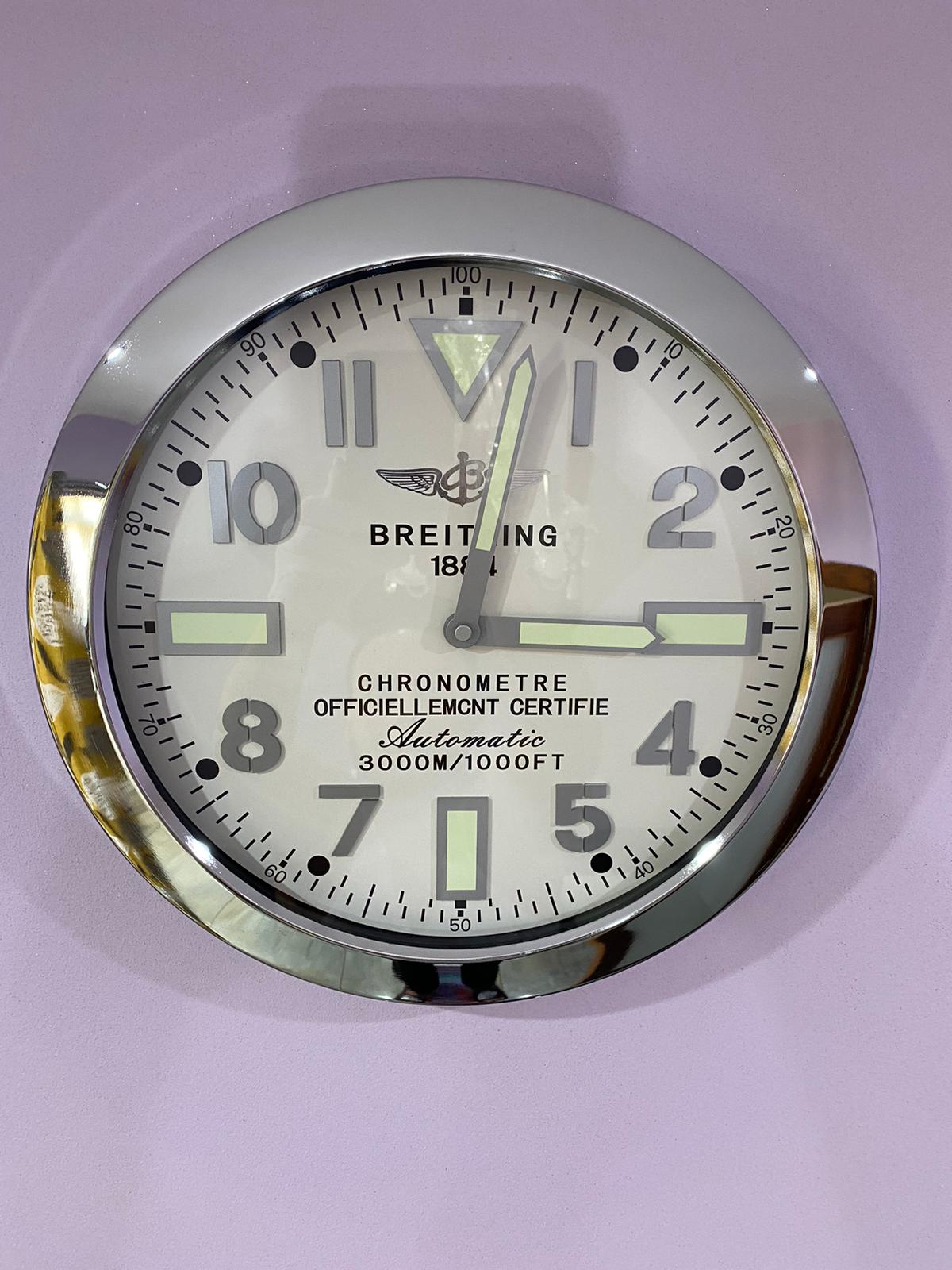
Wall clock design has moved beyond simply choosing a practical timekeeper for an empty wall. In 2026, the most interesting designs treat the clock as part of the room’s architecture, balancing scale, materials, colour, proportion, and readability. Large wall clocks can now work as quiet focal points rather than decorative objects that compete with everything around them.
This shift is partly connected to the broader return of wall clocks in interior design. Rather than hiding timekeeping technology behind a phone or smart speaker, homeowners are increasingly using clocks as visible pieces of interior decoration. This recent look at the return of wall clocks also reflects how traditional home accessories are being reconsidered in contemporary interiors.
What Is Driving Wall Clock Design Trends In 2026?
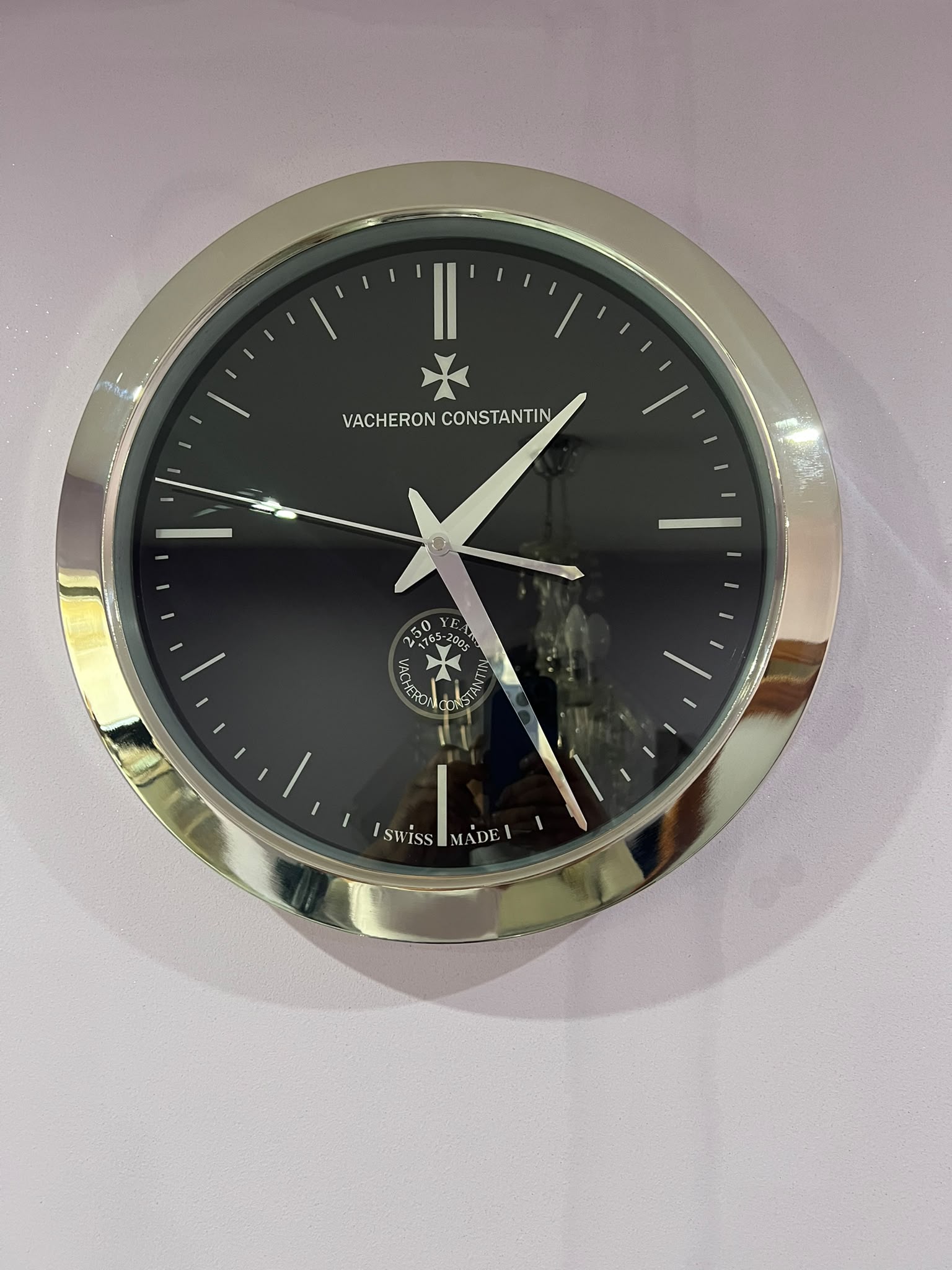
Luxurious Vacheron wall ClockLuxurious Vacheron wall Clock
The biggest change is that wall clock design is becoming more architectural. Instead of asking only whether a clock matches the furniture, designers increasingly consider how its size and shape interact with the wall itself.
A large wall clock can fill visual space above a sofa, dining table, console, fireplace, or staircase without requiring several smaller decorative pieces. The result can feel more deliberate because one substantial object establishes the visual centre of the room.
At the same time, current designs are moving away from unnecessary decoration. Contemporary interiors often benefit from clean lines, restrained colours, exposed materials, and strong proportions. This is why both minimalist and statement-style clocks can work well when their scale is appropriate.
1. Oversized Clocks Are Becoming Architectural Features
One of the clearest trends is the use of large wall clocks as statement pieces. The purpose is not simply to make the numbers easier to read. Scale changes how the entire wall is perceived.
An extra large wall clock can create a sense of balance on a broad, otherwise empty surface. On a smaller wall, however, the same clock may dominate the room. The useful principle is therefore proportion rather than size alone.
Before choosing a big wall clock, consider the width of the wall, the furniture underneath it, and the distance from which the clock will normally be viewed. A well-proportioned clock looks intentional; one that is too large can make the surrounding furniture appear undersized.
For more guidance on using substantial clocks as focal points, this guide to big wall clocks offers useful context on scale and placement.
2. Minimalist Clock Designs Are Getting More Refined
Minimalism remains important, but today’s minimalist clock designs are not necessarily plain or inexpensive-looking. The emphasis is increasingly on proportion, negative space, material quality, and visual clarity.
A modern wall clock with slim hands, restrained markers, and a simple face can provide structure without becoming the dominant feature of a room. Black, white, metallic, and neutral finishes are particularly adaptable because they can work with different interior palettes.
The important distinction is between minimal and empty. A good minimalist design still has a visual identity. It simply achieves that identity with fewer elements.
3. Metallic Finishes Add A Controlled Luxury Effect
Metallic finishes continue to influence wall clock design, particularly in rooms that already use brass, gold, chrome, or darker metal accents.
Gold and brushed-metal details can add warmth to neutral interiors, while black metal tends to create stronger contrast. The best results usually come when the clock relates to another finish already present in the room rather than introducing a completely unrelated metallic colour.
For example, a gold-accented clock can connect naturally with brass lighting, cabinet handles, or decorative objects. This creates continuity without requiring every item in the room to match exactly.
4. Long And Linear Clocks Suit Modern Walls
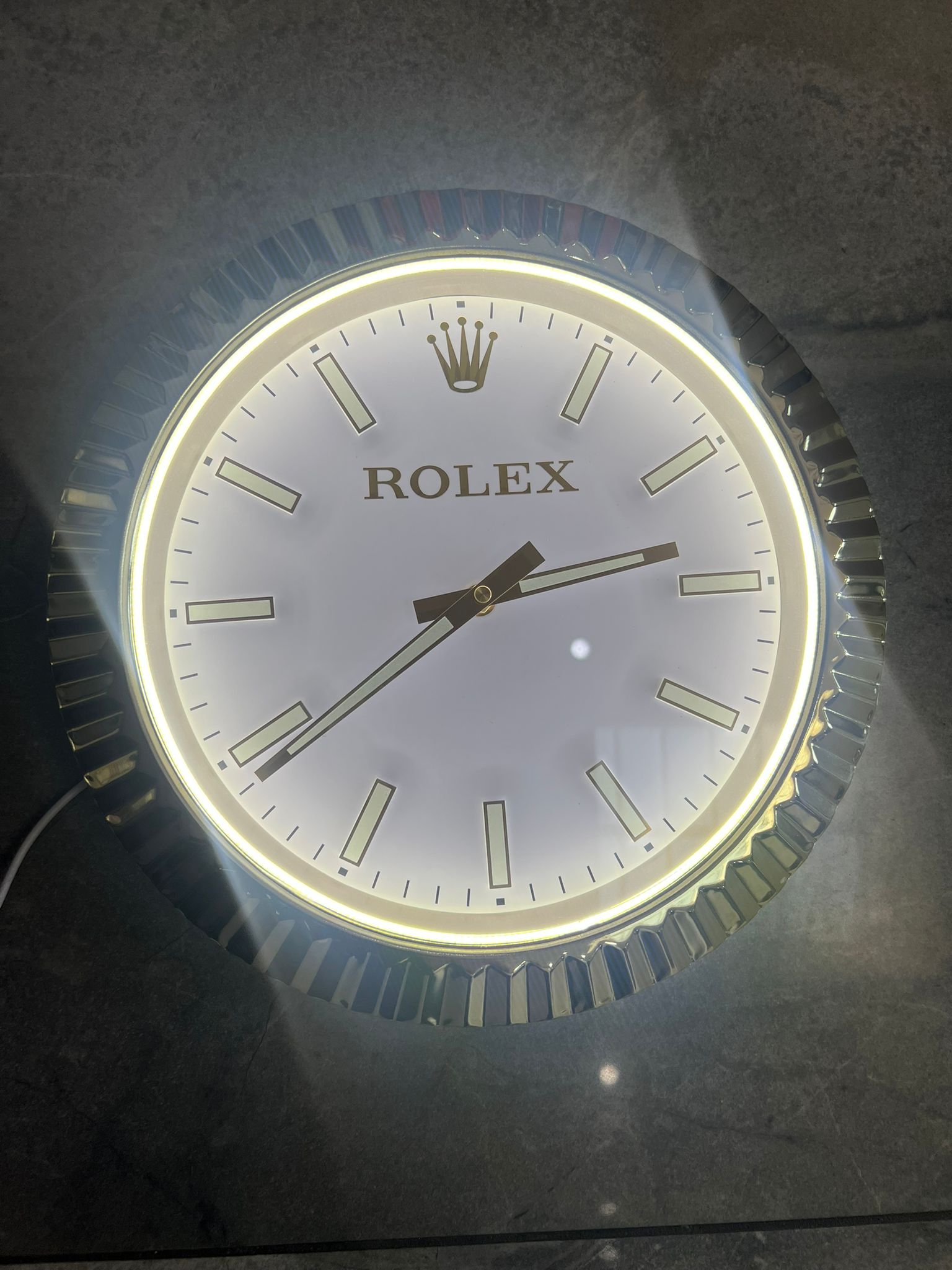
Luxury Rolex Datejust Wall Clock in Gold bezel – White face
Another interesting direction is the rise of modern long wall clocks and elongated clock structures. These designs work differently from traditional round clocks because their proportions interact with horizontal or vertical architectural lines.
A long wall clock can be particularly useful above wide furniture, where a conventional round clock might leave too much unused space. It can also create movement across a large wall without requiring an oversized circular face.
The principle is simple: choose a clock whose geometry complements the geometry already present in the room.
5. Statement And Sculptural Designs Are Returning
Not every current wall clock design is minimalist. Sculptural clocks, unusual frames, layered elements, and unconventional arrangements are also finding their place in contemporary homes.
The appeal comes from making the clock function as both an object and a timepiece. Instead of looking like something added after the room was finished, a unique design can become part of the room’s overall composition.
This approach works particularly well in living rooms, entrance halls, offices, and dining areas where there is enough wall space for the clock to be appreciated from different angles.
A useful starting point is this overview of large wall clocks that make a statement, particularly when considering how scale changes the character of a room.
6. Contemporary Materials Are Mixing With Traditional Forms
Current clock designs are also combining familiar shapes with different materials. Traditional circular forms may now appear with wood, metal, glass, textured finishes, or contrasting hands.
This works because the familiar shape makes the clock easy to understand, while the material provides its personality.
A contemporary wall clock therefore does not have to look futuristic. A classic form can still feel modern when its proportions, finish, and surrounding space are handled thoughtfully.
7. Silent Movement Is Becoming Part Of The Design Experience
A clock can look perfect on the wall and still become irritating if its movement produces a noticeable ticking sound.
For bedrooms, offices, reading areas, and open-plan living spaces, silent or low-noise movement is therefore an important practical consideration. It does not necessarily change the appearance of the clock, but it changes how comfortably the object fits into daily life.
This is a good example of why effective wall clock design should be considered beyond appearance. The best choice balances visual impact with the way the clock behaves in the room.
How Should You Choose A Large Wall Clock For A Modern Home?
Hublot Wall Clock
Start with the wall rather than the product. Look at the available width, furniture position, ceiling height, natural light, and colours already present.
If the room contains many decorative elements, a simpler clock can create visual order. If the wall is largely empty, a designer wall clock with stronger proportions or detailing may provide the structure the space needs.
It is also worth considering viewing distance. A clock that looks elegant close up may become difficult to read from the opposite side of a room. The most successful choice therefore combines decorative value with practical legibility.
For further inspiration, these 2026 wall clock design ideas explore several directions influencing contemporary interiors.
Are Large Wall Clocks Still Suitable For Luxury Interiors?
Yes, but luxury does not necessarily mean excessive decoration. In a refined interior, the strongest clock may be the one that has excellent proportions, controlled detailing, and a finish that supports the rest of the room.
A carefully selected designer wall clock can provide a focal point without making the space feel crowded. This is particularly useful when the surrounding furniture already has a strong visual identity.
For homeowners interested in more distinctive options, our luxury wall clock collection provides examples of how premium-inspired clock designs can be used as part of a wider interior scheme.
Those looking for a more recognisable watch-inspired aesthetic can also explore our Rolex wall clock collection, while an AP Audemars Piguet wall clock offers another approach to combining horological inspiration with wall décor.
The Best Trend Is The One That Fits The Room
The current wall clock design landscape is broad enough that there is no single style everyone needs to follow. Oversized faces, minimalist clocks, metallic finishes, sculptural designs, and long linear forms can all work when they respond to the room rather than simply following a trend.
That is perhaps the most useful way to think about large wall clocks in 2026. The goal is not to buy the most fashionable clock available. It is to choose a design whose scale, material, geometry, and function make sense in the space.
Trends will change, but proportion and balance tend to remain useful. A thoughtfully chosen large clock can therefore feel current without becoming dated when the next design trend arrives.
Frequently Asked Questions
Are Large Wall Clocks Still In Style In 2026?
Yes. Large wall clocks remain relevant because they combine practical timekeeping with decorative impact. Current designs favour proportion, minimalist details, metallic finishes, sculptural forms, and materials that complement contemporary interiors.
What Is The Most Popular Wall Clock Design Trend?
Oversized, minimalist, and statement-style clocks are among the strongest current directions. The emphasis is on clean proportions, readable faces, restrained finishes, and designs that function as focal points without overwhelming the room.
Are Large Wall Clocks Suitable For Small Rooms?
They can be, provided the scale is carefully considered. A large clock can create a strong focal point in a small room, but overly wide or heavily detailed designs may make the space feel visually crowded.
What Materials Work Best For Modern Wall Clocks?
Metal, wood, glass, and mixed-material designs all work well. The right choice depends on the existing interior. Matching or complementing nearby finishes usually creates a more cohesive result than introducing an unrelated material.
Should A Large Wall Clock Match The Furniture?
It does not need to match exactly. A better approach is to coordinate one or two elements, such as colour, metal finish, or shape. This creates visual connection while allowing the clock to maintain its own character.
Are Silent Wall Clocks Better For Modern Homes?
Silent clocks can be particularly useful in bedrooms, offices, studies, and open-plan spaces. They reduce the distraction caused by ticking while preserving the visual function of a traditional wall clock.
A More Thoughtful Way To Choose Your Clock
We believe a wall clock should earn its place in a room through proportion, usefulness, and design rather than simply through decoration. At Luxury Wall Clock, we focus on distinctive pieces that can complement modern interiors while remaining practical for everyday spaces.
Explore our Luxury Wall Clock collection to compare different styles, finishes, and proportions, and choose the design that genuinely makes sense for your wall.
The best clock is rarely the one that follows a trend most closely. It is the one that still looks right when the trend has moved on.